From Cry to Calm: Understanding Your Baby’s Different Cries and What They Mean
Struggling to understand why your baby is crying? Learn the different types of baby cries, what they mean, and how to respond with confidence. A must-read guide for new moms.

If you’re a new mom, one of the most overwhelming moments is when your baby starts crying—and you have no idea why.
You’ve fed them, changed the diaper, rocked them… but the crying continues.
It can make you feel helpless.
But here’s something comforting: your baby isn’t just crying—they’re communicating.
Over time, you’ll learn to “decode” these cries like a language.
Let’s break it down.
Why Babies Cry So Much
Newborns don’t have words, but they have needs—hunger, discomfort, sleep, attention.
Crying is their only way to express it.
In the early months, babies may cry 2–3 hours a day, which is completely normal.
The goal isn’t to stop crying completely—it’s to understand it better.
1. The Hunger Cry
This is the most common cry.
- Starts softly
- Becomes rhythmic and repetitive
- Comes with lip-smacking or sucking fingers
Real-life moment: You just sat down to eat after hours… and your baby starts crying again.
Yes, babies often get hungry very quickly.
👉 What to do: Feed immediately. Delaying can make the cry more intense and harder to calm.
2. The Sleepy Cry
Overtired babies don’t sleep easily—they cry.
- Rubbing eyes
- Turning face away
- Fussiness that increases quickly
Tip: Creating a gentle sleep routine helps. Using a baby cot instead of always holding your baby can help them associate a specific space with sleep.
3. The Discomfort Cry
This could be:
- Wet diaper
- Tight clothes
- Too hot or too cold
Indian context tip: In many homes, babies are overdressed out of concern. But overheating can actually make them uncomfortable.
👉 Always check:
- Neck temperature (not hands/feet)
- Diaper condition
4. The Gas or Colic Cry
This cry is intense.
- High-pitched
- Baby pulls legs toward tummy
- Face turns red
Usually happens in the evening.
👉 What helps:
- Gentle tummy massage
- Burping after every feed
- Holding baby upright
Sometimes placing the baby in a soothing rocker can help ease discomfort and calm them gently.
5. The “I Need Attention” Cry
Yes, babies crave connection.
- Stops crying when you pick them up
- Looks at you and calms down
They just want you.
And that’s completely okay.
👉 You’re not “spoiling” your baby. You’re building emotional security.
6. The Overstimulation Cry
Too many people, noise, lights—especially common in Indian households with visitors.
- Turning head away
- Sudden crying after being fine
- Difficulty calming down
👉 Solution: Take your baby to a quiet room.
A safe, enclosed space like a playpen can also help create a calm environment where your baby isn’t overwhelmed.
👉 Explore: Safe Baby Playpens
How to Respond Without Panic
Here’s a simple step-by-step approach:
- Check hunger
- Check diaper
- Check sleep
- Check comfort
- Offer cuddles
If nothing works, pause.
Take a deep breath.
You’re learning—and so is your baby.
When Should You Be Concerned?
Contact a doctor if:
- Cry is unusually high-pitched
- Baby refuses feeding
- There’s fever or vomiting
Trust your instincts—you know your baby best.
Final Thought
In the beginning, it feels like guessing.
But slowly, patterns appear.
That “mysterious cry” starts making sense.
And one day, you’ll respond before the crying even begins.
That’s when you’ll realize—you’ve learned your baby’s language.
Dr. Vandana Raghav
Pediatrician & Child Health Expert
Hi, I’m Vandana Raghav, a pediatrician and child health expert associated with Mamaverse. My work is focused on helping parents better understand their child’s health, growth, development, nutrition, and overall well-being through reliable and practical guidance. As a pediatrician, I understand that parents often have questions and concerns at every stage of their child’s development. Through Mamaverse, I aim to make medically complex topics easier to understand while providing evidence-informed information that parents can use to have more informed conversations about their child’s care. My areas of interest include newborn care, infant health, child growth and development, nutrition, feeding, sleep, common childhood health concerns, preventive care, and overall child wellness. I believe trustworthy parenting and child-health information should be accurate, responsible, and easy to understand. My goal is to help Mamaverse provide parents with dependable health information while encouraging them to consult their pediatrician or other qualified healthcare professional whenever individualized medical assessment, diagnosis, or treatment is required. My Areas of Expertise: Pediatrics, Newborn Care, Infant Health, Child Health, Growth and Development, Child Nutrition, Preventive Care, Parenting and Child Wellness
Comments (0)
Leave a Comment
Related Articles

Baby Feeding Made Easy: How to Choose the Right High Chair for Your Baby
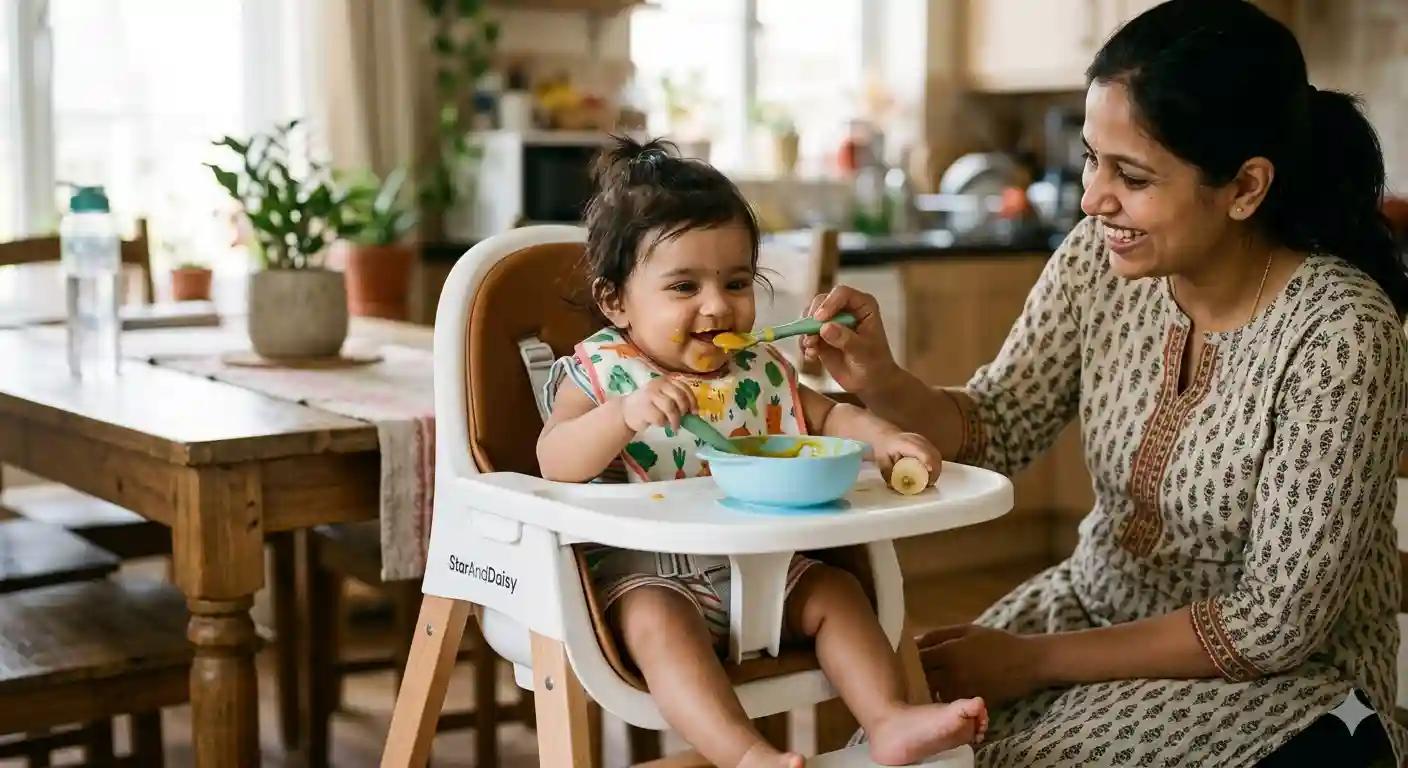
The first time I placed my baby in a high chair, it felt like a milestone—until the food started flying. Choosing the right high chair can make mealtimes safer, easier, and far less chaotic.
The Art of Gentle Weaning: Moving from Milk to Solids Smoothly
The day I offered my daughter her first spoonful of rice water, she looked at me like I had personally betrayed her. By week three, she was grabbing the spoon. Weaning is a journey, not a deadline.

Healthy Diet Chart for Toddlers
Discover a nutritious diet chart tailored for toddlers that ensures balanced meals. Learn how to make mealtime enjoyable and healthy!

Best Baby Carriers in India 2026: Types, Safety & Buying Guide
A good baby carrier is your hands-free parenting superpower. But with so many types available in India, choosing the right one can be overwhelming. This guide makes it simple.