Indoor Activities for Babies: Simple Ways to Keep Them Engaged at Home
Stuck indoors with your baby? Discover simple and engaging indoor activities that support your baby’s development while making everyday moments fun and meaningful.
Indoor Activities for Babies: Simple Ways to Keep Them Engaged at Home
Indoor days are quite common, whether due to extreme weather conditions, pollution levels, or simply a busy routine. For parents in India, especially during hot summers, rainy monsoons, or chilly winters, staying indoors with a baby becomes part of daily life.
Keeping babies engaged indoors may seem challenging at first, but it doesn’t require complicated toys or elaborate setups. In fact, simple, thoughtful activities often work best. Babies learn through interaction, repetition, and exploration, and a home environment can easily support all three.
With the right mix of play, movement, and bonding, indoor time can become both enjoyable and developmentally beneficial.
1. Floor Play Sessions
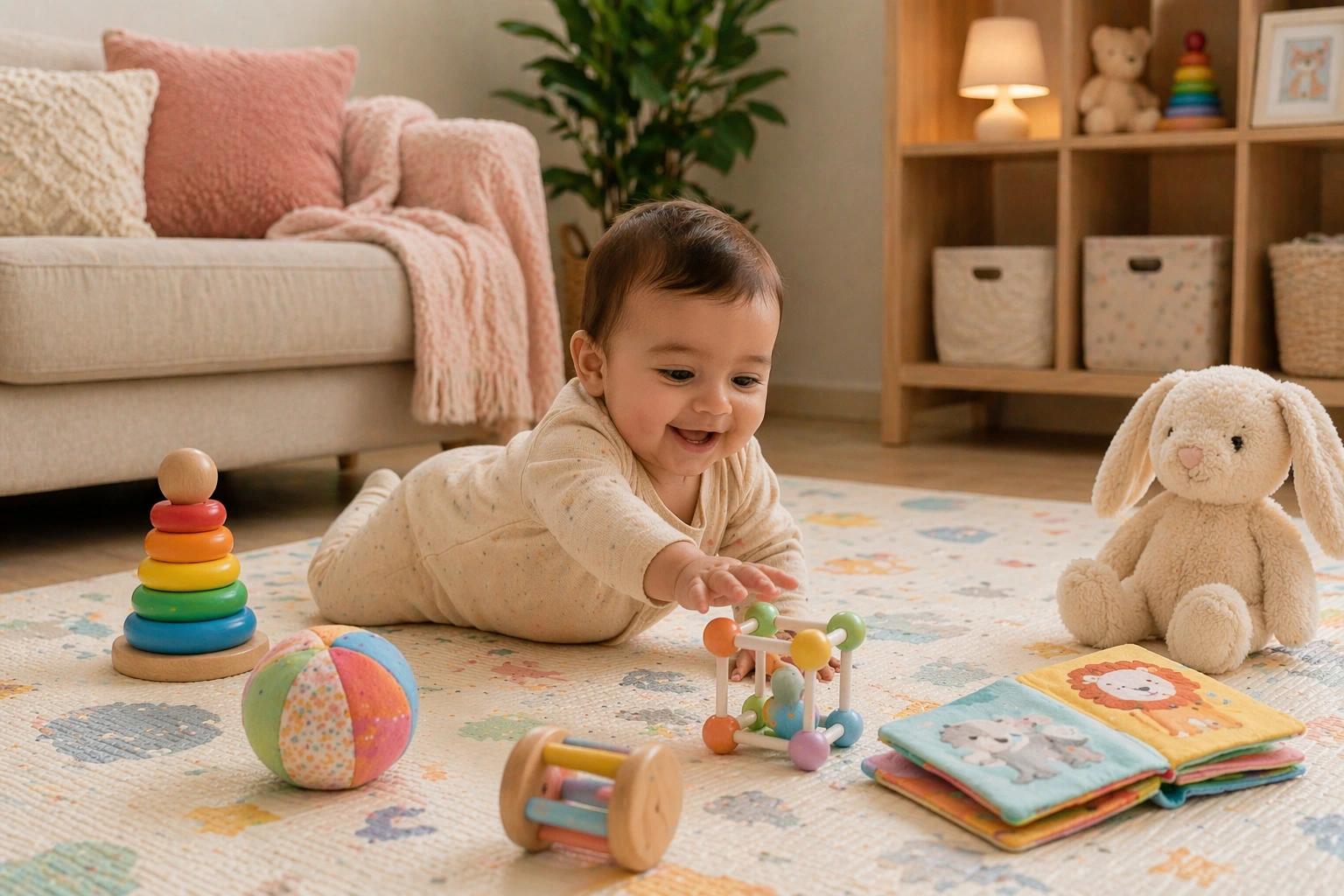
Creating a dedicated play area is one of the easiest ways to encourage independent and safe play. A soft play mat or padded surface provides comfort and allows babies to move freely without the risk of injury.
Floor play is essential for physical development. It helps babies strengthen their muscles, improve coordination, and explore movements like rolling, crawling, and stretching.
Some simple ideas for floor play:
- Place a few toys within reach to encourage movement
- Use colorful or textured toys to stimulate curiosity
- Allow supervised tummy time for younger babies
2. Music and Movement
Music is naturally engaging for babies and plays an important role in sensory and emotional development.
Try:
- Playing gentle songs or lullabies
- Clapping along to rhythms
- Moving your baby’s hands and legs gently to the beat
- Singing rhymes with actions
Traditional Indian rhymes and lullabies can add cultural familiarity and warmth to these moments.
3. Storytime
Storytime supports early language development and helps babies recognize sounds, tones, and expressions.
Simple ways to do it:
- Use picture books with bright visuals
- Describe objects around the room
- Tell simple, repetitive stories
- Use expressive tones and facial gestures
4. Simple Games
Classic games are effective because they rely on interaction and repetition.
Try these:
- Peek-a-boo
- Hiding and revealing toys
- Gentle tickling games
- Copying facial expressions
These activities help babies understand object permanence and cause-and-effect relationships.
5. Exploration Corners
A small exploration corner encourages curiosity and independent play.
Ideas include:
Soft toys with different textures - Safe kitchen items like silicone spoons
- Stacking cups or blocks
- Fabric or cloth books
6. Movement Practice
Movement helps build strength, balance, and coordination.
Encourage:
- Tummy time
- Crawling toward toys
- Assisted standing
- Reaching and grabbing
7. Sensory Play (Bonus Activity)
Sensory play stimulates touch, sight, and sound.
Ideas:
- Textured fabrics
- Rattles and sound toys
- Exploring safe household materials
Conclusion
Indoor time doesn’t have to feel limiting. With the right approach, it can become a valuable opportunity for learning, bonding, and development.
Simple activities, consistent routines, and a safe environment are all that’s needed to keep babies engaged. Everyday moments of interaction often make the biggest difference.
Dr. Vandana Raghav
Pediatrician & Child Health Expert
Hi, I’m Vandana Raghav, a pediatrician and child health expert associated with Mamaverse. My work is focused on helping parents better understand their child’s health, growth, development, nutrition, and overall well-being through reliable and practical guidance. As a pediatrician, I understand that parents often have questions and concerns at every stage of their child’s development. Through Mamaverse, I aim to make medically complex topics easier to understand while providing evidence-informed information that parents can use to have more informed conversations about their child’s care. My areas of interest include newborn care, infant health, child growth and development, nutrition, feeding, sleep, common childhood health concerns, preventive care, and overall child wellness. I believe trustworthy parenting and child-health information should be accurate, responsible, and easy to understand. My goal is to help Mamaverse provide parents with dependable health information while encouraging them to consult their pediatrician or other qualified healthcare professional whenever individualized medical assessment, diagnosis, or treatment is required. My Areas of Expertise: Pediatrics, Newborn Care, Infant Health, Child Health, Growth and Development, Child Nutrition, Preventive Care, Parenting and Child Wellness
Comments (0)
Leave a Comment
Related Articles

Keeping Babies Germ Free at Home
Learn effective tips to keep your baby safe from germs at home. A clean environment promotes health and happiness for your little one.

From Chaos to Calm: Building a Daily Routine with a Newborn
For the first three weeks, I had no idea what time it was, what day it was, or whether what I was eating was breakfast or dinner. Then I discovered the power of a loose daily rhythm — and everything changed.

How to Choose the Right Baby Gear for Every Stage (0–2 Years Guide)
Confused about what baby gear to buy? This stage-by-stage guide helps parents choose the right products from newborn to toddler—without wasting money.

Joint Family Life with a Baby: Making It Work Beautifully
Living in a joint family with a new baby is one of the most complicated gifts of Indian parenthood. The support is real. The opinions are also very real. Here's how we made it work.