Safety First, Space Always: Baby-Proofing Small Indian Homes
Smart baby-proofing tips for Indian homes that balance safety, space, and style without compromising comfort.
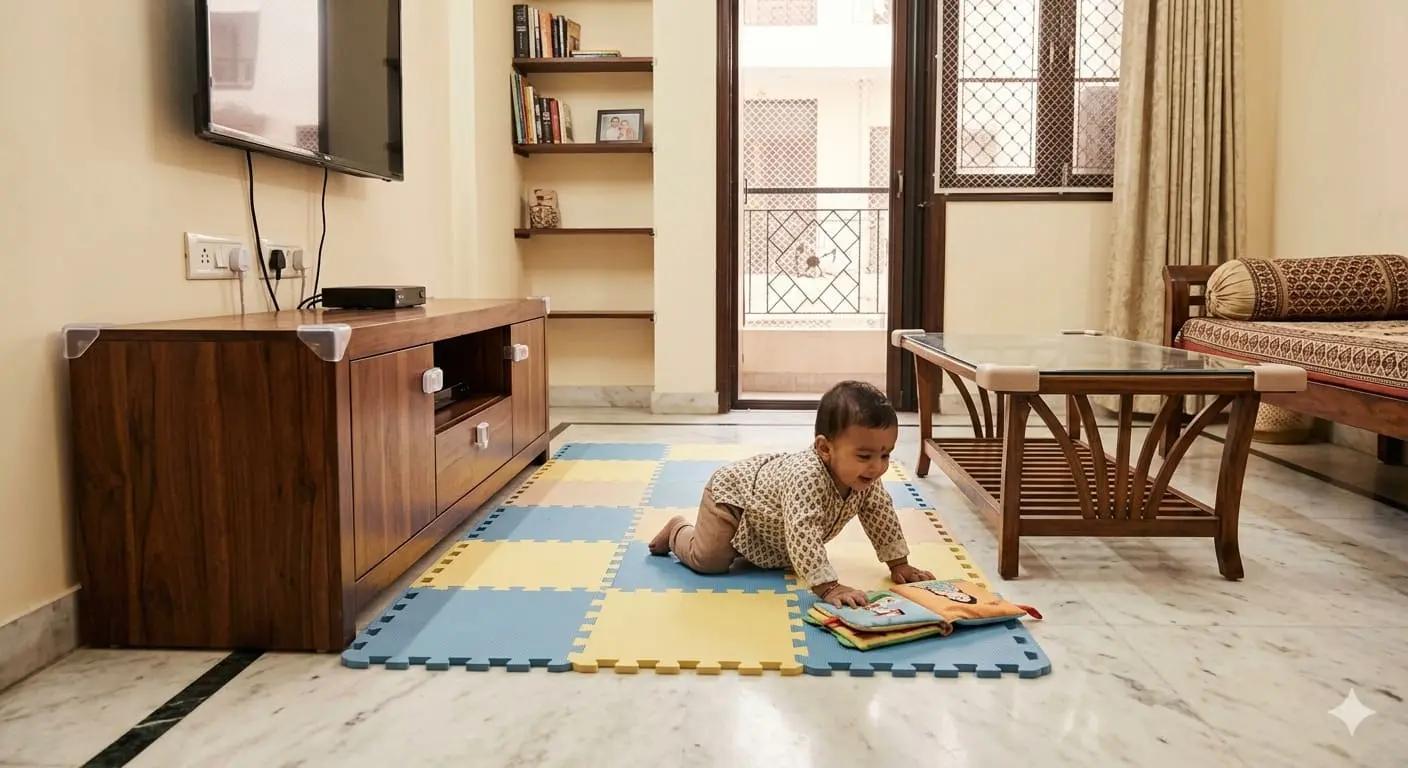
In many Indian urban households, space is a luxury. Between heavy teak furniture, marble flooring, and compact balconies, the arrival of a crawling baby can feel like a safety puzzle. Homes are often designed for aesthetics and functionality for adults, not for curious little explorers who are just beginning to understand their surroundings. However, baby-proofing doesn’t mean sacrificing your home’s style or making drastic changes. It’s about thoughtful adjustments that create a safe, secure, and comfortable environment for your child.
As babies grow and become mobile, they start exploring every corner of the house. From crawling under tables to pulling themselves up using furniture, their curiosity can lead them into potentially dangerous situations. This is why proactive baby-proofing is essential—it allows children to explore freely while giving parents peace of mind.
Addressing the Flooring Challenge
Hard surfaces like marble, granite, or tiles are common in Indian homes due to their durability and cooling properties. However, these surfaces can be harsh for babies who are learning to crawl, sit, or walk. Even a small slip can result in injuries. Instead of traditional carpets, which can trap dust and allergens, consider using interlocking foam mats.
Furniture and Sharp Edges
Indian homes often feature sturdy wooden furniture with sharp edges and corners. Coffee tables, bed frames, TV units, and cabinets can pose a risk to toddlers who are still developing balance and coordination. To reduce the risk of injuries, use transparent corner guards and edge protectors.
These safety additions are designed to blend seamlessly with your furniture, preserving the aesthetic appeal of your home. They are easy to install and remove, making them a practical solution for rented spaces as well. It’s also a good idea to rearrange furniture slightly to create more open, obstacle-free pathways where your baby can move around safely.
Securing Danger Zones
Certain areas of the house require extra attention when baby-proofing. Kitchens, balconies, and bathrooms can be particularly hazardous if left unsecured. Installing magnetic locks in kitchen cabinets prevents babies from accessing sharp utensils, cleaning supplies, or breakable items.
Balconies, which are common in urban apartments, should be fitted with sturdy mesh guards or safety nets to prevent accidents. Ensure that there are no climbable objects like stools or chairs placed near railings. In bathrooms, consider using anti-slip mats and keeping buckets, tubs, and cleaning products out of reach.
Electrical and Small Object Safety
Electrical outlets and loose wires are often overlooked hazards. Babies are naturally drawn to sockets and dangling cords, which can be dangerous. Use socket covers to block access and secure wires using cable organizers or clips. This simple step significantly reduces the risk of electric shocks or accidental pulling of appliances.
Additionally, keep small objects like coins, buttons, or decorative items away from low surfaces. Babies tend to put everything in their mouths, so ensuring that choking hazards are out of reach is crucial.
Creating Safe Exploration Zones
Instead of restricting your baby’s movement completely, it’s beneficial to create safe zones where they can explore independently. Playpens or baby gates can help define boundaries within your home, especially in compact apartments. These zones can be filled with soft toys, books, and sensory items that encourage development while ensuring safety.
This approach not only minimizes risks but also promotes confidence and independence in your child as they learn to navigate their environment.
Maintaining Aesthetic and Functionality
One of the biggest concerns for parents is maintaining the look and feel of their home while baby-proofing. Fortunately, modern safety products are designed with both functionality and aesthetics in mind. From transparent guards to minimalistic safety locks, you can find solutions that integrate seamlessly into your home decor.
Explore modern safety solutions at StarAndDaisy that blend safety with style, helping you create a baby-friendly home without compromising on design.
Takeaway: Baby-proofing is not about limiting your child’s movement but about enabling safe exploration. With a few smart adjustments, even compact Indian homes can become secure spaces where your baby can grow, play, and thrive confidently.
Dr. Vandana Raghav
Pediatrician & Child Health Expert
Hi, I’m Vandana Raghav, a pediatrician and child health expert associated with Mamaverse. My work is focused on helping parents better understand their child’s health, growth, development, nutrition, and overall well-being through reliable and practical guidance. As a pediatrician, I understand that parents often have questions and concerns at every stage of their child’s development. Through Mamaverse, I aim to make medically complex topics easier to understand while providing evidence-informed information that parents can use to have more informed conversations about their child’s care. My areas of interest include newborn care, infant health, child growth and development, nutrition, feeding, sleep, common childhood health concerns, preventive care, and overall child wellness. I believe trustworthy parenting and child-health information should be accurate, responsible, and easy to understand. My goal is to help Mamaverse provide parents with dependable health information while encouraging them to consult their pediatrician or other qualified healthcare professional whenever individualized medical assessment, diagnosis, or treatment is required. My Areas of Expertise: Pediatrics, Newborn Care, Infant Health, Child Health, Growth and Development, Child Nutrition, Preventive Care, Parenting and Child Wellness
Comments (0)
Leave a Comment
Related Articles
Portable Baby Bassinets for Travel-Friendly Parenting
Discover the benefits of portable baby bassinets and how they make travel easier for parents. Explore options for safe and comfy sleep on the go.

Common Mistakes First-Time Parents Make (And How to Avoid Them)
Navigating parenthood can be overwhelming. Discover common mistakes first-time parents make and how to avoid them for a smoother journey.
Indoor vs Outdoor Baby Gear: What Modern Parents Should Invest In
Indoor vs outdoor baby gear—what should parents actually invest in? A practical guide to help you spend smart based on your lifestyle.
Minimalist Parenting: Buy Less but Choose Smart
I used to think loving my baby meant buying everything in the baby aisle. Six months later, her favourite toy was a wooden spoon—and half the products sat unused. That’s when minimalist parenting made sense.